


Description
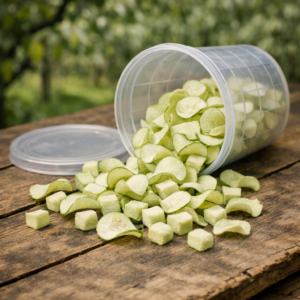
Freeze-dried squash—including summer varieties like zucchini and yellow squash, or winter types like butternut and pumpkin—is fresh squash that has had nearly 100% of its moisture removed through a low-temperature vacuum chamber. This process preserves the vegetable’s cellular structure, resulting in a vibrant, shelf-stable product with an airy, delicate crunch.
Flavor and Texture
- Concentrated Earthiness: Removing the water eliminates the bland or watery taste sometimes associated with fresh squash. It concentrates the natural sugars, yielding a deeply sweet, nutty, or earthy flavor.
- Light, Wafer-Like Snap: Summer squash slices become brittle, hollowed-out crisps, while winter squash cubes turn into porous, melt-in-your-mouth nuggets.
Key Benefits
- Maximum Nutrient Retention: Because freeze-drying uses cold temperatures rather than heat, it preserves fragile antioxidants, Vitamin A (beta-carotene), Vitamin C, potassium, and magnesium at near-fresh levels.
- Rapid, Superior Rehydration: The porous texture allows freeze-dried squash to absorb liquids much faster than traditional dehydrated vegetables, expanding back to its original shape and a tender texture in minutes.
- Exceptional Emergency Food: When sealed in airtight containers with oxygen absorbers, freeze-dried squash stays nutritious and edible for 20 to 25+ years, making it a staple for long-term food storage.
Common Culinary Uses
- Instant Soups and Curries: Diced butternut squash can be tossed straight into simmering stews, chilis, or coconut curries. It absorbs the broth and plumps up quickly without requiring lengthy peeling or chopping.
- Healthy Veggie Chips: Slices of zucchini or yellow squash are eaten dry right out of the bag as a low-calorie chip alternative, often seasoned with sea salt, garlic, or parmesan cheese.
- Baking and Thickening Powders: Ground into a fine flour or powder, winter squash can be mixed into pancake batter, muffin mixes, or stirred into sauces and pet foods as an instant nutritional thickener.
- Lightweight Camping Meals: It weighs a fraction of fresh vegetables, making it highly prized by backpackers for assembling lightweight, nutrient-dense trail dinners.
Rehydration Comparison
- Winter Squash (Butternut/Pumpkin): Rehydrates beautifully into a soft, tender texture that feels almost identical to freshly roasted or boiled squash, making it excellent for mashing or pie fillings.
- Summer Squash (Zucchini/Yellow): While it rehydrates well in hot liquids for stir-fries and bakes, eating rehydrated slices plain will result in a slightly pliable, soft texture rather than a crisp bite. They are generally enjoyed most when eaten completely dry as a snack chip.
Reviews
There are no reviews yet.